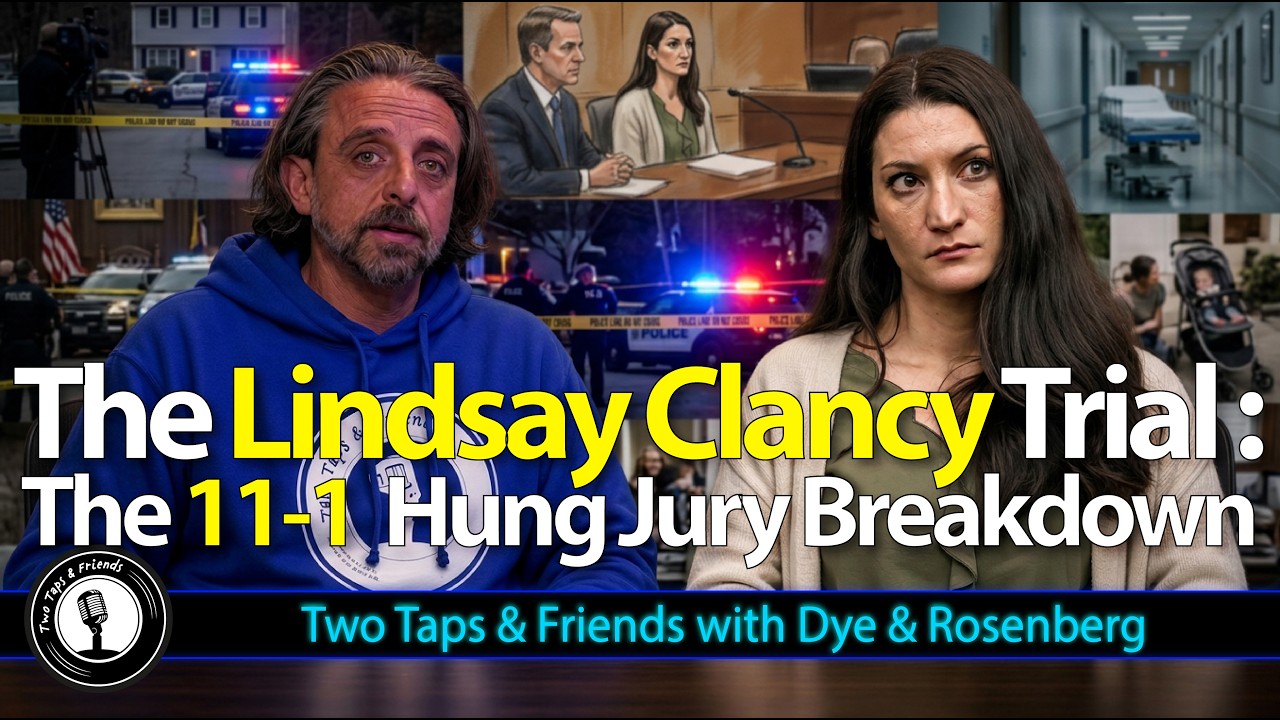
After about 40 hours of deliberation, the jury in the Lindsay Clancy murder trial could not reach a verdict. Eleven jurors favored finding her not guilty by reason of lack of criminal responsibility. One juror held out for first-degree murder.
Clancy, a labor and delivery nurse and mother of three, was charged after the deaths of her children. Her defense centered on postpartum psychosis and on the 13 medications she had been prescribed after seeking help several times.
Can she be tried again?
A deadlocked jury usually ends in a mistrial, and double jeopardy generally does not prevent prosecutors from trying the case again. On Episode 90, Daniel Rosenberg and Michael Dye go through the double jeopardy arguments that have been raised, how Massachusetts defines the insanity defense, and the choices defense attorney Kevin Reddington made at trial.
They also discuss Patrick Clancy’s 60 Minutes interview and what civil commitment would mean in practice compared with a prison sentence. For background on the evidence, the panel’s earlier breakdown in Episode 85 covers the medications and the planning question in detail.
This brief summarizes reporting and analysis discussed on Two Taps and Friends. It is not legal advice.